
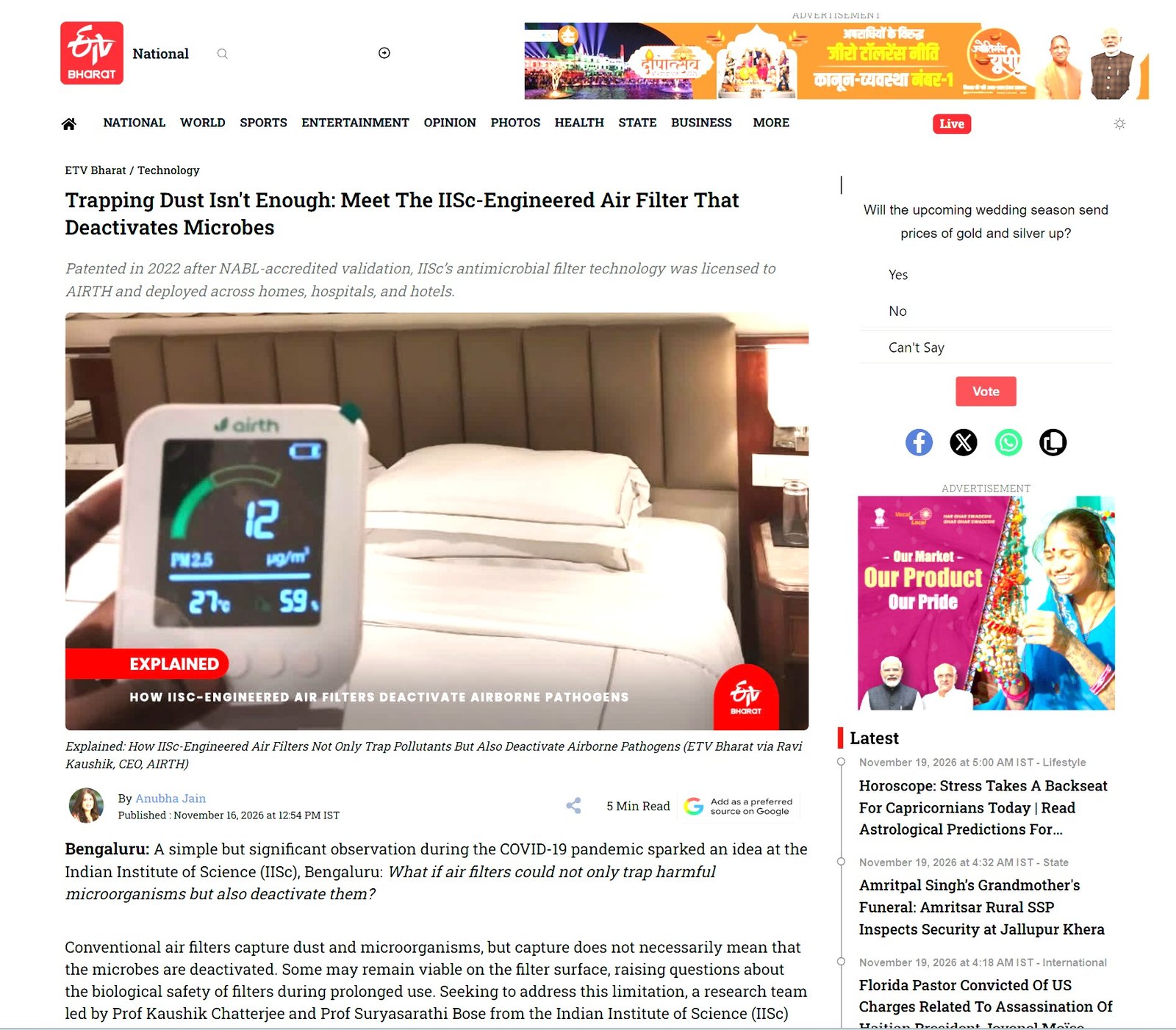
A simple but significant observation during the COVID-19 pandemic sparked an idea at the Indian Institute of Science (IISc), Bengaluru: What if air filters could not only trap harmful microorganisms but also deactivate them?
Conventional air filters capture dust and microorganisms, but capture does not necessarily mean that the microbes are deactivated. Some may remain viable on the filter surface, raising questions about the biological safety of filters during prolonged use. Seeking to address this limitation, a research team led by Prof Kaushik Chatterjee and Prof Suryasarathi Bose from the Indian Institute of Science (IISc) developed an antimicrobial coating for air filters using polyphenols and polycationic polymers, drawing inspiration from naturally occurring compounds found in green tea. The polycationic components interact with microbial surfaces, while the polyphenolic components help disrupt microbial structures. Together, they are designed to damage microorganisms and reduce their viability. Read my exclusive interview with Prof Kaushik Chatterjee and Prof Suryasarathi Bose. https://www.etvbharat.com/en/technology/explained-how-iisc-engineered-air-filters-trap-pollutants-and-deactivate-airborne-pathogens-enn26111602052